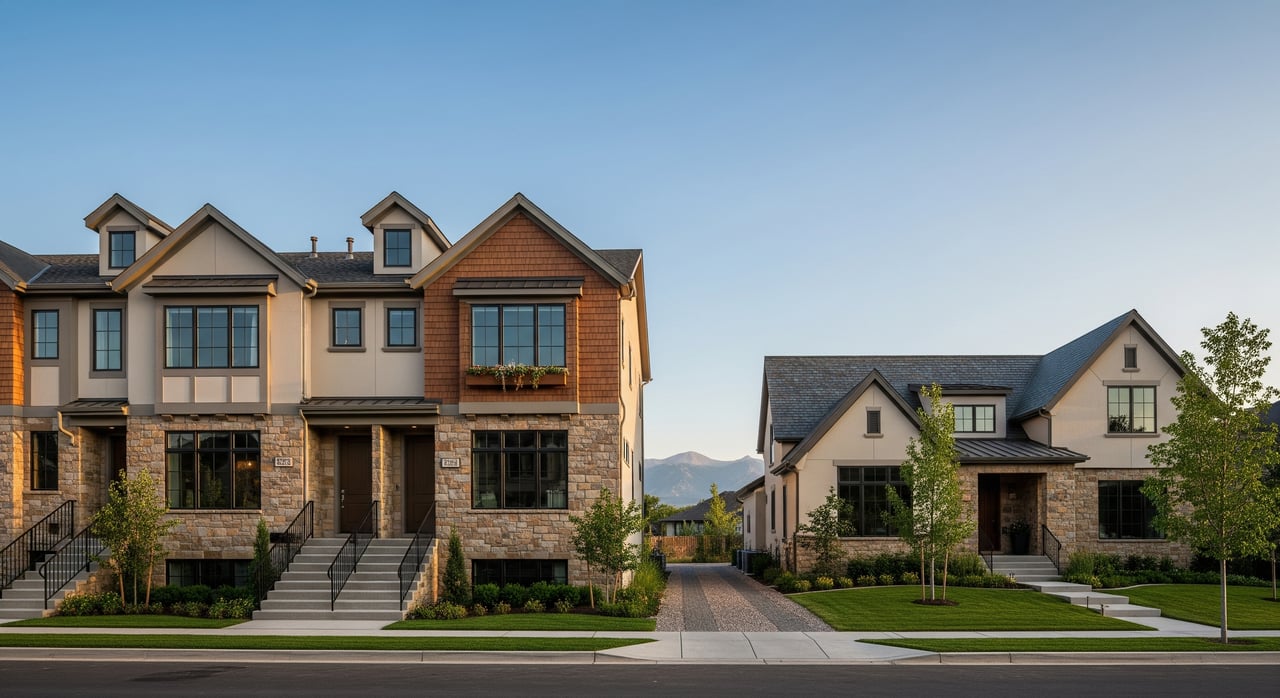
Are you deciding between a townhome and a single-family home in Centennial? You are not alone. Many buyers weigh maintenance, privacy, and long-term value as they settle into Arapahoe County. This guide breaks down the real differences you will feel day to day, plus what to verify before you write an offer. You will leave with a simple framework you can use to choose the right fit for your lifestyle and budget. Let’s dive in.
Centennial is a suburban city in Arapahoe County with a mix of established subdivisions, planned communities, and newer infill. Much of the city sits within the Cherry Creek School District, which many buyers consider when comparing neighborhoods. You will find townhomes clustered near retail and transit corridors, including areas around Southglenn and major arterials, while detached homes are spread across subdivisions with a range of lot sizes.
Local governance and services are straightforward. City planning and zoning guide development patterns and allowed densities. Property taxes are assessed through Arapahoe County. Many communities include homeowners associations, so it is common to review HOA documents as part of your due diligence in Centennial.
A townhome is an attached home that shares one or more walls. Many are multi-level and designed for lower maintenance. Ownership can be fee-simple, where you own the land under your unit, or part of a condominium legal regime, where you own the interior and share common elements through the HOA. Most townhome communities include an HOA that covers exterior care and common areas.
A detached home is a stand-alone house on its own lot. You control the land and structure, and you handle most maintenance. Some detached neighborhoods in Centennial have HOAs that maintain common parks, private roads, or amenities, while others do not.
Whether a townhome is fee-simple or part of a condominium regime affects your HOA rules, insurance setup, and lending. Condo-regime properties can have additional financing requirements, especially for FHA and VA loans. Always confirm the legal classification early so your lender can advise on approvals and documentation.
Most townhome HOAs in Centennial handle exterior maintenance and common areas. That can include roofing, siding or painting, grounds and irrigation, trash, and snow removal on shared drives and sidewalks. Owners typically handle interior maintenance and sometimes small private patios or limited-use areas. Because Colorado winters can be snowy, HOA-managed snow removal is a meaningful convenience in many attached communities.
With a detached home, you take on exterior maintenance, from roof and siding to gutters, landscaping, and snow removal. In HOA neighborhoods, dues often support shared amenities or landscaping, but not the building itself. This gives you more control and flexibility, paired with more hands-on maintenance.
HOAs usually carry a master insurance policy. The scope varies. Some cover the building shell only, and others cover walls-in for certain components. Your own policy should fill the gaps, so it is important to know exactly what the master policy covers and how deductibles are handled. Review the HOA’s reserve study and budget to understand funding for future projects. Older communities sometimes levy special assessments for big-ticket items like roofs or siding.
A practical rule of thumb for detached homes is to plan for annual maintenance at roughly 1 to 3 percent of the home’s value, depending on age and condition. Townhome owners trade some of those variable exterior costs for a set monthly HOA fee. To compare apples to apples, add your projected HOA dues to your mortgage, then weigh that total against a detached home’s mortgage plus a reasonable maintenance reserve.
Detached homes usually offer larger yards, more space between neighbors, and more flexibility to add outdoor features like larger decks or gardens. Townhomes often provide a small private patio or compact yard and more shared walls. That can mean less exterior work and potentially more ambient noise. Consider your tolerance for close proximity and your desire for outdoor projects.
Detached homes are more likely to have multi-car garages and on-lot parking. Many townhomes offer an attached one- or two-car garage or assigned spaces, with guest parking rules set by the HOA. Always confirm guest parking and on-street rules in writing.
Townhomes often have multiple levels. That can be a plus for separation of space and a challenge for mobility or strollers. Ranch-style detached options exist in Centennial, though they can be less common and may carry a premium in some neighborhoods.
Orientation and lot placement matter. In Centennial’s suburban layout, proximity to major roads, retail, or schools can affect privacy and noise. Visit at different times of day to gauge traffic, neighbor activity, and sunlight in key rooms and outdoor spaces.
Think beyond the principal and interest payment. Build a side-by-side for each home you are considering:
This helps you compare a townhome’s predictable HOA structure with a detached home’s more flexible but variable maintenance costs.
Conventional, FHA, and VA loans can work for both townhomes and detached homes. If the property is in a condominium regime, some loan programs may require project-level approvals. Lenders also evaluate HOA financials and insurance. Ask your lender early to review the project status so there are no surprises in underwriting.
Appraisers need relevant comparable sales. Attached and detached homes use different comp sets. If you are considering an unusual floor plan or a newer infill townhome with limited comps nearby, plan for a careful valuation process.
Taxes are administered through the Arapahoe County Assessor and Treasurer. The assessed value drives your bill, and special districts can add separate line items. Always verify the property’s tax history and any special district fees during due diligence.
Detached homes often draw a wider buyer pool because of private yards and greater separation. Townhomes can perform well, especially when affordability pushes demand toward attached housing and when the location offers strong convenience to retail and transit. School district coverage in Centennial is an added consideration for many buyers in both product types.
HOA health has a direct impact on resale. High dues without clear value, pending litigation, low reserves, or frequent special assessments can narrow your buyer pool and affect financing. Review HOA budgets, reserve studies, rental caps, and owner-occupancy ratios with long-term resale in mind.
Use these questions to narrow your focus:
Follow this step-by-step process for any Centennial property:
Choosing between a townhome and a detached home in Centennial comes down to how you want to live and what you want to maintain. A local, design-focused advisor can help you quantify costs, pressure-test resale assumptions, and spot HOA or insurance issues before they become problems. If you are also selling, a design-led strategy and flexible timing options can smooth the transition to your next home.
Ready to compare properties side by side and find your best fit in Centennial? Reach out to Ava Lee for a clear plan, from shortlist to closing.